Community project
ESP32 Interactive Controller
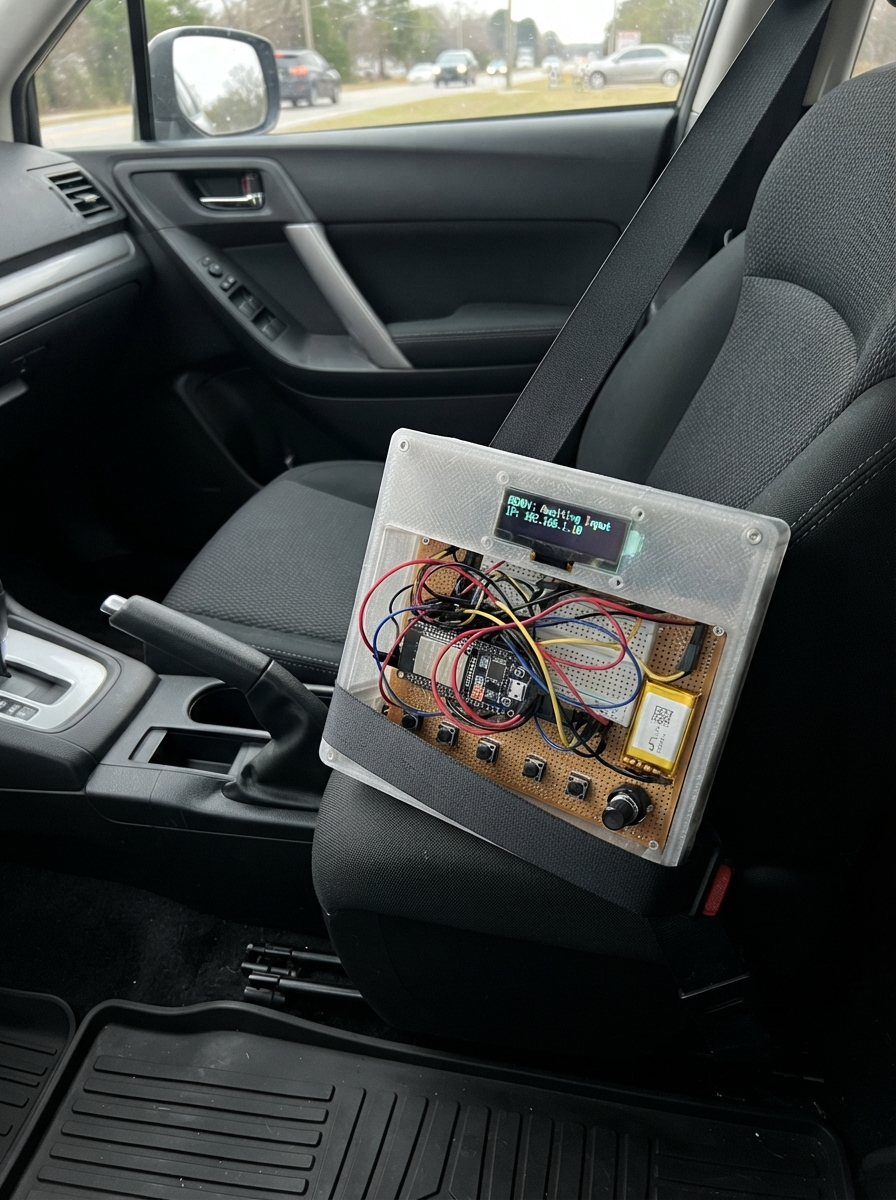
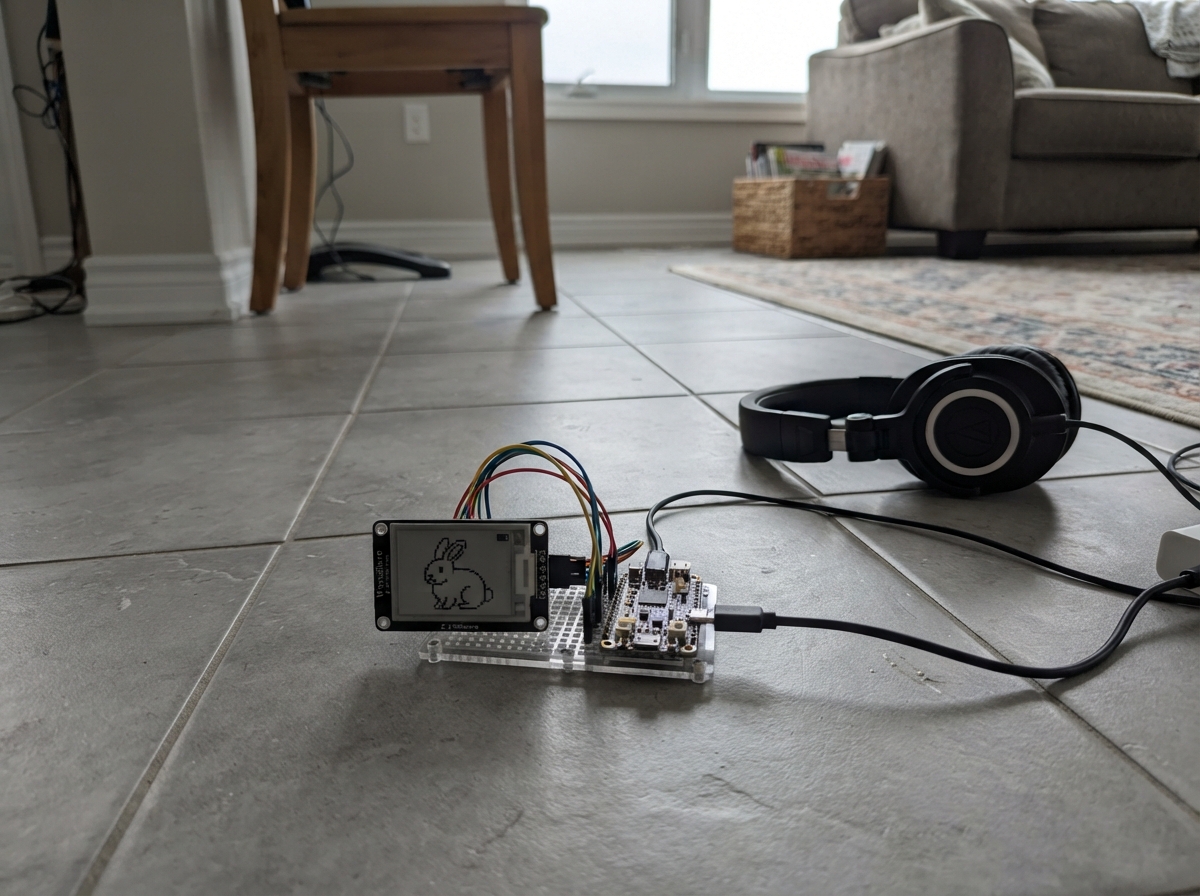
The ESP32 Interactive Controller brings a touchscreen interface to your projects using the UNIHIKER K10 platform. This compact device combines the powerful ESP32 microcontroller with a built-in display, making it ideal for creating interactive dashboards, control panels, and visual applications.
This guide provides everything needed to get started: a complete parts list, wiring diagram, step-by-step assembly instructions, and ready-to-use firmware based on LVGL graphics library. Simply place the K10 on a clear surface, power it via USB, and begin building custom interfaces with buttons, text, and graphics.
Wiring diagram
Assemble it in 2 steps
1. Set the K10 on a clear surface
Place the UNIHIKER K10 where you can clearly see its built-in screen. This conference picture uses the screen already inside the board, so do not connect any extra wires.
- Keep the screen facing upward so the people and meeting table are easy to see.
- Do not push wires into the board while it is powered; no extra wiring is needed for this drawing.
2. Power the board by USB
Connect a USB cable from the UNIHIKER K10 to your computer. The cable powers the board and lets Schematik send the conference drawing to it.
- Use a USB cable that carries data as well as power.
- Pull the plug by its plastic or metal connector, not by the cable itself.
Deploy the firmware
#include <Arduino.h>
#include <unihiker_k10.h>
#include <lvgl.h>


// Forward declarations
static void official(lv_obj_t *screen, int x, int y, uint32_t jacket, uint32_t skin, uint32_t hair);

UNIHIKER_K10 k10;

static lv_obj_t *box(lv_obj_t *parent, int x, int y, int w, int h,
                     uint32_t color, int radius = 0) {
  lv_obj_t *item = lv_obj_create(parent);
  lv_obj_remove_style_all(item);
  lv_obj_set_pos(item, x, y);
  lv_obj_set_size(item, w, h);
  lv_obj_set_style_bg_color(item, lv_color_hex(color), LV_PART_MAIN);
  lv_obj_set_style_bg_opa(item, LV_OPA_COVER, LV_PART_MAIN);
  lv_obj_set_style_radius(item, radius, LV_PART_MAIN);
  lv_obj_set_style_border_width(item, 0, LV_PART_MAIN);
  return item;
}

static lv_obj_t *text(lv_obj_t *parent, const char *words, int x, int y,
                      uint32_t color,
                      const lv_font_t *font = &lv_font_montserrat_14) {
  lv_obj_t *label = lv_label_create(parent);
  lv_label_set_text(label, words);
  lv_obj_set_pos(label, x, y);
  lv_obj_set_style_text_color(label, lv_color_hex(color), LV_PART_MAIN);
  lv_obj_set_style_text_font(label, font, LV_PART_MAIN);
  return label;
}

static void official(lv_obj_t *screen, int x, int y, uint32_t jacket,
                     uint32_t skin, uint32_t hair) {
  // A seated conference delegate: head, hair, jacket, tie, and chair.
  box(screen, x + 10, y, 24, 24, skin, 12);
  box(screen, x + 8, y - 3, 28, 9, hair, 5);
  box(screen, x + 4, y + 23, 36, 42, jacket, 5);
  box(screen, x + 20, y + 25, 5, 22, 0xE7C55B, 1);
  box(screen, x, y + 62, 44, 9, 0x4A5A68, 3);
  box(screen, x + 3, y + 69, 6, 20, 0x34424D, 2);
  box(screen, x + 35, y + 69, 6, 20, 0x34424D, 2);
}

void setup() {
  k10.begin();
  k10.initScreen();

  lv_obj_t *screen = lv_scr_act();
  lv_obj_set_style_bg_color(screen, lv_color_hex(0xEAF0F4), LV_PART_MAIN);
  lv_obj_set_style_bg_opa(screen, LV_OPA_COVER, LV_PART_MAIN);

  // Bright conference-room wall, window, and floor.
  box(screen, 0, 0, 240, 320, 0xEAF0F4);
  box(screen, 0, 236, 240, 84, 0xB88463);
  box(screen, 0, 236, 240, 7, 0x8E6249);
  box(screen, 16, 28, 54, 72, 0x9DD4E6, 3);
  box(screen, 20, 32, 46, 64, 0xD8F4FA, 1);
  box(screen, 41, 32, 4, 64, 0xFFFFFF, 0);
  box(screen, 20, 62, 46, 4, 0xFFFFFF, 0);

  // Presentation screen.
  box(screen, 82, 18, 140, 94, 0x4B5664, 4);
  box(screen, 88, 24, 128, 82, 0xFFFFFF, 2);
  text(screen, "COUNCIL MEETING", 100, 33, 0x2C4A63,
       &lv_font_montserrat_14);
  box(screen, 102, 60, 98, 6, 0x5C9BD0, 2);
  box(screen, 102, 72, 72, 6, 0x78B982, 2);
  box(screen, 102, 84, 88, 6, 0xE0A04D, 2);
  box(screen, 148, 112, 6, 18, 0x4B5664, 1);
  box(screen, 124, 128, 55, 5, 0x4B5664, 2);

  // Name plaque and a large conference table.
  box(screen, 77, 144, 86, 23, 0xD9C27C, 3);
  text(screen, "OFFICIALS", 88, 148, 0x3E4A52, &lv_font_montserrat_14);
  box(screen, 10, 211, 220, 34, 0x774B37, 7);
  box(screen, 14, 211, 212, 9, 0xA56C49, 5);
  box(screen, 26, 242, 12, 51, 0x5B382B, 2);
  box(screen, 202, 242, 12, 51, 0x5B382B, 2);

  // Microphones and papers on the table.
  box(screen, 57, 194, 3, 19, 0x293C4A, 1);
  box(screen, 51, 191, 15, 5, 0x293C4A, 2);
  box(screen, 178, 194, 3, 19, 0x293C4A, 1);
  box(screen, 172, 191, 15, 5, 0x293C4A, 2);
  box(screen, 101, 199, 31, 10, 0xFFFDF5, 1);
  box(screen, 105, 202, 23, 2, 0x7B94A2, 1);

  // Five people gathered for the meeting.
  official(screen, 12, 130, 0x557EAB, 0xE8B28B, 0x4A3029);
  official(screen, 55, 135, 0x8A667E, 0xBF805D, 0x342C2B);
  official(screen, 99, 132, 0x4D737A, 0xF0BE99, 0x6A493B);
  official(screen, 143, 135, 0x6B799E, 0x8E5D43, 0x252525);
  official(screen, 186, 130, 0x6C8A65, 0xE0A37D, 0x74472F);

  // A small potted plant makes the room feel welcoming.
  box(screen, 15, 277, 22, 18, 0xB56842, 2);
  box(screen, 18, 262, 8, 18, 0x57955B, 5);
  box(screen, 26, 258, 9, 22, 0x6CA967, 5);
}

void loop() {
  // This is a still illustration, so it is drawn once rather than refreshed.
  lv_timer_handler();
  delay(5);
}
Remix this project
Make it yours in one click
Open a full copy of this project in your own Schematik workspace — diagram, code, parts, and assembly steps included. Swap the sensor, add features, or redesign the whole thing with AI. The author's original stays untouched.