On this page
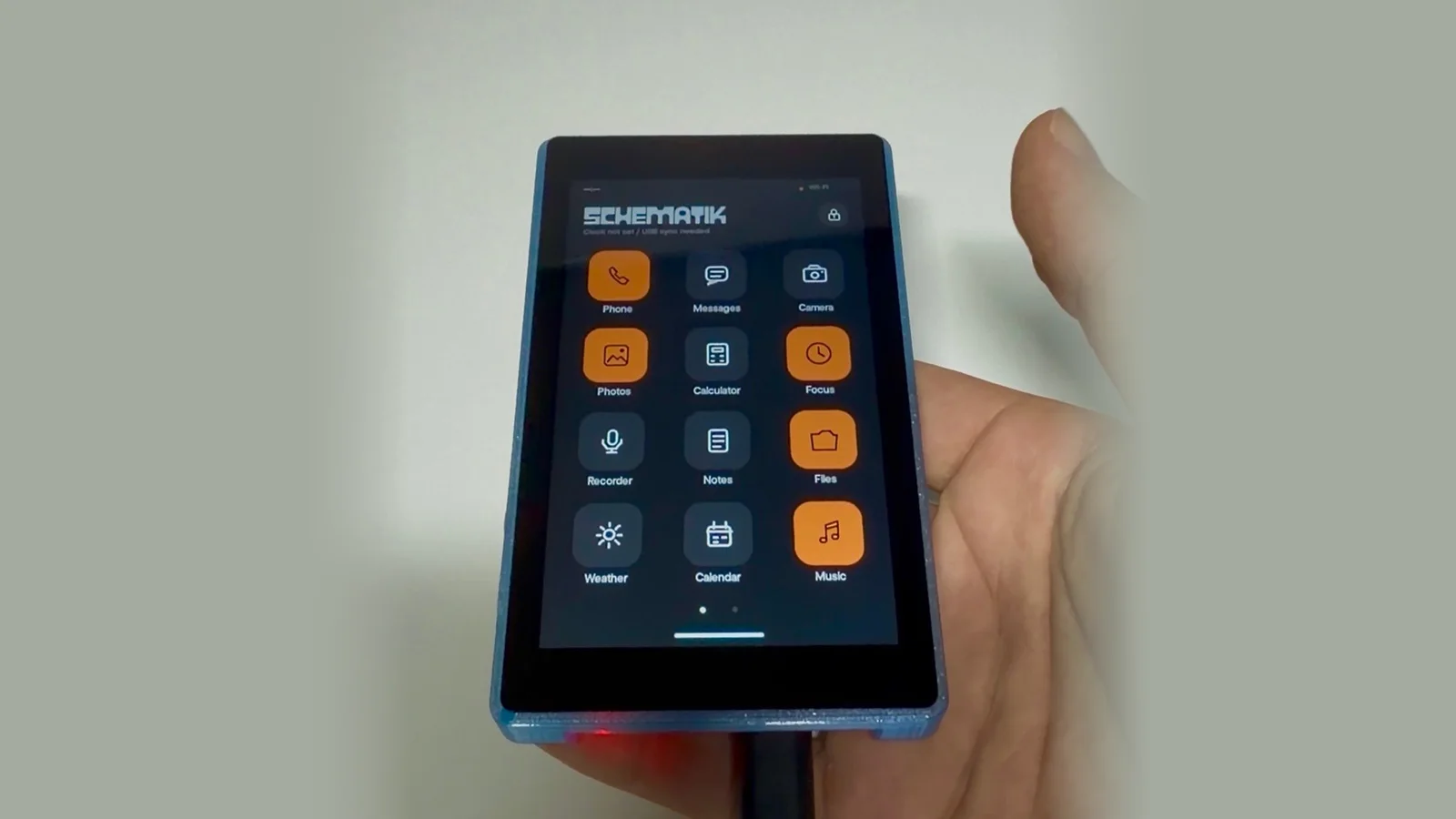
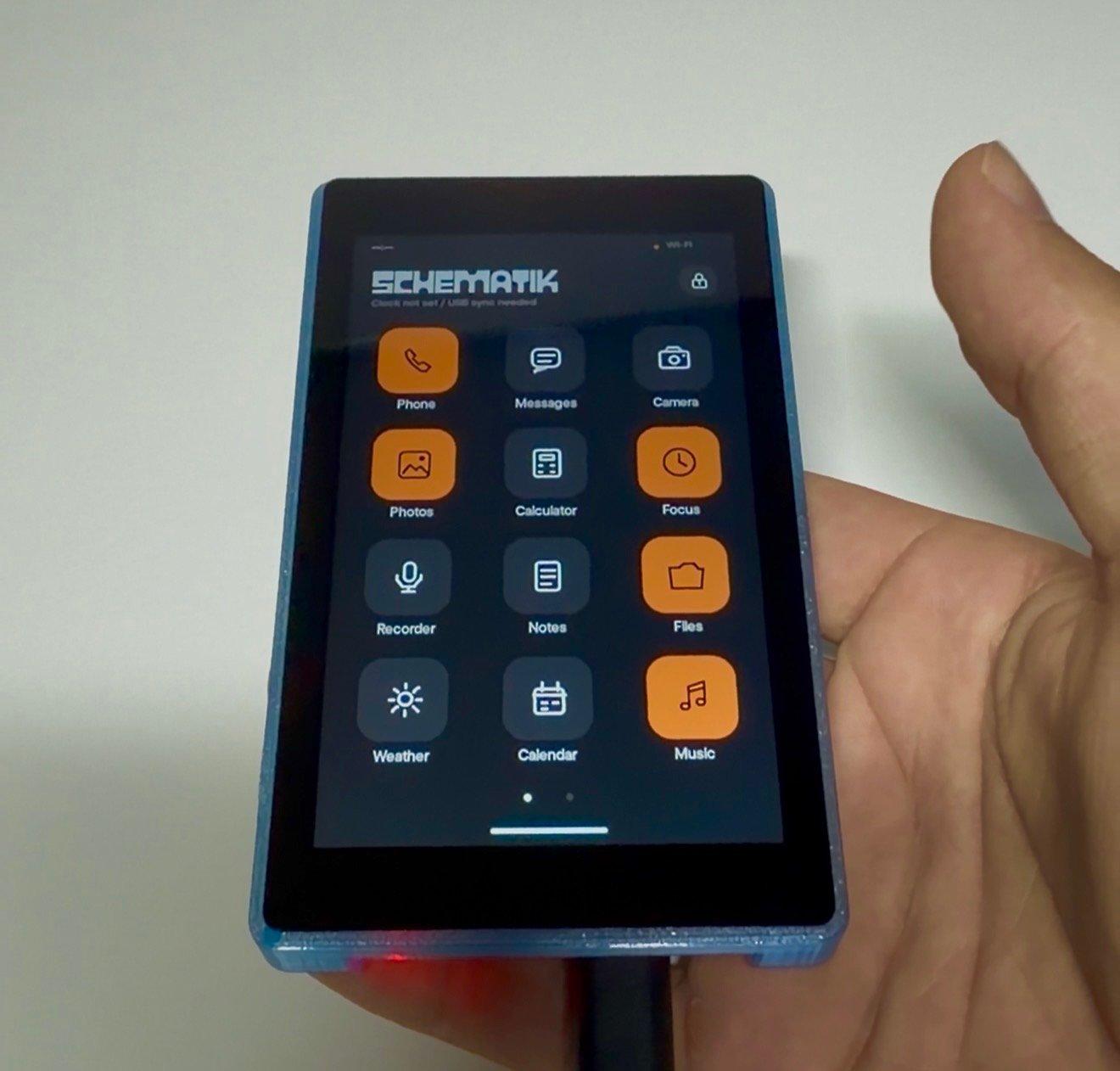
The phone above is the DIY ESP Phone: an ESP32-P4 board with a 4.3-inch touch screen, in a blue case. The ESP32-P4 is Espressif's high-performance chip: two RISC-V cores at up to 400 MHz, with fast interfaces for a camera and a display and a hardware H.264 video encoder.
The catch: the ESP32-P4 has no Wi-Fi and no Bluetooth. Wireless comes from a second chip, usually an ESP32-C6, which most P4 boards already have soldered on.
What the ESP32-P4 is
Espressif's datasheet lists touch control panels, cameras that stream video, vision AI and voice terminals among its uses. The hardware follows from that.
| Part | What you get |
|---|---|
| Main CPU | 2 × RISC-V, up to 400 MHz |
| Low-power CPU | 1 × RISC-V, up to 40 MHz |
| On-chip RAM | 768 KB, plus 32 KB low-power |
| PSRAM in package | 16 MB or 32 MB |
| GPIOs | 55 |
| Camera in | MIPI-CSI, 2 lanes, with ISP |
| Display out | MIPI-DSI, 2 lanes |
| Video | H.264 encode, 1080p at 30 fps |
| USB | 2.0 High-Speed OTG |
| Network | Ethernet MAC, no radio |
MIPI-CSI and MIPI-DSI are fast serial buses for cameras and displays, at 1.5 Gbps per lane. The ISP (image signal processor) processes the camera image, up to 1920 × 1080. PSRAM is extra RAM stacked inside the chip package. Flash sits outside the chip, on the board.
There is more media hardware: a JPEG encoder and decoder, a pixel processing accelerator and 2D-DMA for moving graphics around without the CPU, and voice activity detection. The CPU has a single-precision FPU and AI instruction extensions. The Ethernet MAC needs an external PHY chip, and the chip also has an SD card host.
No Wi-Fi on the chip
There is no Wi-Fi and no Bluetooth inside the ESP32-P4. Espressif's answer is a companion chip: any ESP32-C or ESP32-S series chip, connected over SPI, SDIO or UART and driven with its ESP-Hosted or ESP-AT software.
Board makers have mostly made the choice for you. The boards below put an ESP32-C6 module next to the P4 for Wi-Fi 6 and Bluetooth 5 LE. On the Waveshare boards and the M5Stack Tab5 the link is SDIO, a fast bus borrowed from SD cards. Your program runs on the P4 and reaches the network through the C6.
If the device stays plugged in, the Ethernet MAC is the other route: a wired network with no second chip.
ESP32-P4 vs ESP32-S3
The ESP32-S3 is the usual alternative: two Xtensa cores at up to 240 MHz with Wi-Fi and Bluetooth built in.
| ESP32-P4 | ESP32-S3 | |
|---|---|---|
| CPU | 2 × RISC-V | 2 × Xtensa LX7 |
| Max clock | 400 MHz | 240 MHz |
| CoreMark/MHz | 6.92 | 5.54 |
| On-chip RAM | 768 KB | 512 KB |
| GPIOs | 55 | 45 |
| Wi-Fi, Bluetooth | Needs a second chip | Built in |
| Camera | MIPI-CSI or parallel | Parallel only |
| Display | MIPI-DSI or parallel | Parallel only |
| USB | High-Speed | Full-Speed |
| Ethernet | MAC built in | None |
| H.264 encoder | Yes | No |
Pick the S3 when the job is a sensor, a small screen or anything on a battery that needs Wi-Fi: one chip does it all. The ESP32-C3 vs S3 comparison covers that end of the range. Pick the P4 when the project is a large touch screen, a MIPI camera, video or High-Speed USB.
Chip revision v1.x vs v3.x
The first ESP32-P4 chips are revision v1.x. The current chips are v3.x, and Espressif has put revision v1.3 on its end-of-life plan. The new part numbers end in X: ESP32-P4NRW16X and ESP32-P4NRW32X. Espressif's boards got the X too: the ESP32-P4-Function-EV-Board became the ESP32-P4X-Function-EV-Board, and the ESP32-P4-EYE became the ESP32-P4X-EYE.
What changed in v3.x:
- Top clock speed went from 360 MHz to 400 MHz.
- The ISP gained black level correction, dead pixel correction, white balance gain and cropping.
- Bugs were fixed, including a secure boot verification failure.
A v1.x chip and a v3.x chip cannot run the same firmware. v3.x needs ESP-IDF v5.5.3 or later, or v6.0 or later. When you buy, look for the X in the chip or board name and build with a current ESP-IDF.
Which ESP32-P4 board to buy
All three below carry an ESP32-C6 module for Wi-Fi 6. What changes is how much comes attached.
| Board | Screen | Best for |
|---|---|---|
| Espressif P4X EV board | Optional 7″ | Testing every interface |
| Waveshare P4-WIFI6 | Add your own | A bare board |
| Waveshare 4.3″ touch | 4.3″ 480 × 800 | Handhelds, no wiring |
| M5Stack Tab5 | 5″ 1280 × 720 | A finished tablet |
Espressif ESP32-P4X-Function-EV-Board
The ESP32-P4X-Function-EV-Board is Espressif's own board for v3.x chips. It has an ESP32-C6-MINI-1 for Wi-Fi 6 and Bluetooth 5 LE, a 10/100 Ethernet jack, a USB Type-A host port, a High-Speed USB-C port, a microSD slot, 16 MB of flash, a microphone and an ES8311 audio codec. A 7-inch 1024 × 600 touch screen and a 2MP MIPI-CSI camera are optional accessories. Buy it when you want to try everything the chip does, Ethernet included.
Waveshare ESP32-P4-WIFI6
The Waveshare ESP32-P4-WIFI6 is the bare board: an ESP32-P4NRW32X with 32 MB of PSRAM, 32 MB of flash and an ESP32-C6-MINI-1 over SDIO. It has 2-lane MIPI-DSI and MIPI-CSI connectors, High-Speed USB, a TF card slot, a microphone and a speaker header. Waveshare sells 5, 7, 8 and 10.1-inch DSI screens for it and lists the OV5647 camera. Buy it when you want to choose your own screen and camera.
Waveshare ESP32-P4-WIFI6-Touch-LCD-4.3
The ESP32-P4-WIFI6-Touch-LCD-4.3 is the same chip, flash and C6 with a 4.3-inch 480 × 800 IPS capacitive touch screen fitted. It adds two microphones, a speaker header, a MIPI-CSI camera connector, a TF slot, a 3.7 V lithium battery connector and a 40-pin header that fits some Raspberry Pi HATs. It is the board inside the DIY ESP Phone. Waveshare recommends ESP-IDF over Arduino for the P4 for now.
M5Stack Tab5
The M5Stack Tab5 is a finished device: a 5-inch 1280 × 720 IPS touch screen over MIPI-DSI and an SC2356 2MP camera over MIPI-CSI, in a case. Inside are an ESP32-P4 with 16 MB of flash and 32 MB of PSRAM, and an ESP32-C6-MINI-1U for Wi-Fi 6. It has two microphones, a speaker, a 3.5 mm headphone jack, a BMI270 motion sensor, a real-time clock, microSD, USB-A host, USB-C and RS-485. M5Stack's spec table lists the chip as the ESP32-P4NRW32 at 360 MHz. The Tab5 Kit includes an NP-F550 battery; the plain Tab5 has none. You can program it with UiFlow2, Arduino, ESP-IDF or PlatformIO.
What people build with it
Every build here uses a screen that came on the board:
- DIY ESP Phone by Schematik: the Waveshare 4.3-inch board as a pocket phone with a home screen and apps, including clock, weather, a news reader, a game and a calculator. The only wiring is the USB cable.
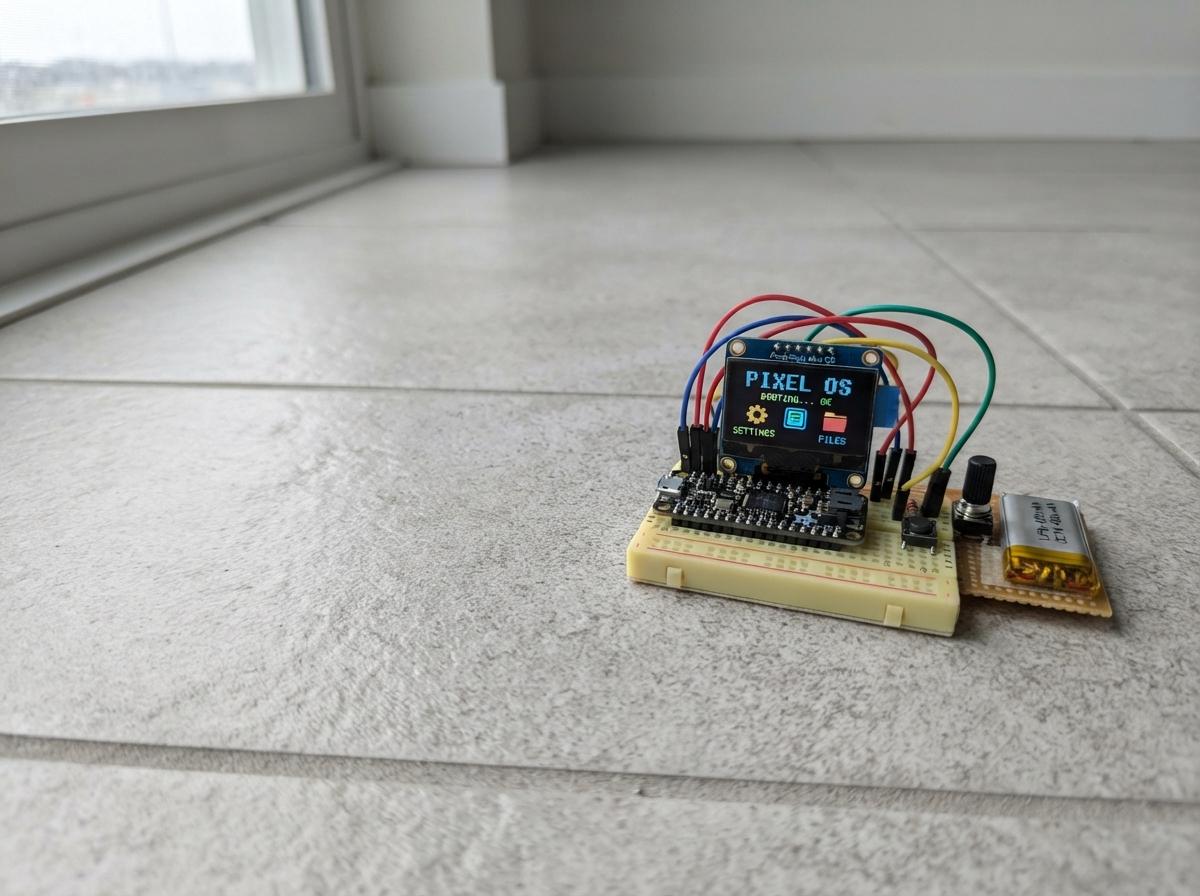
- Pixel-Style Mini OS by hello world!: turns an M5Stack Tab5 into a retro-style handheld with Wi-Fi, a control centre and low-data YouTube preview cards.
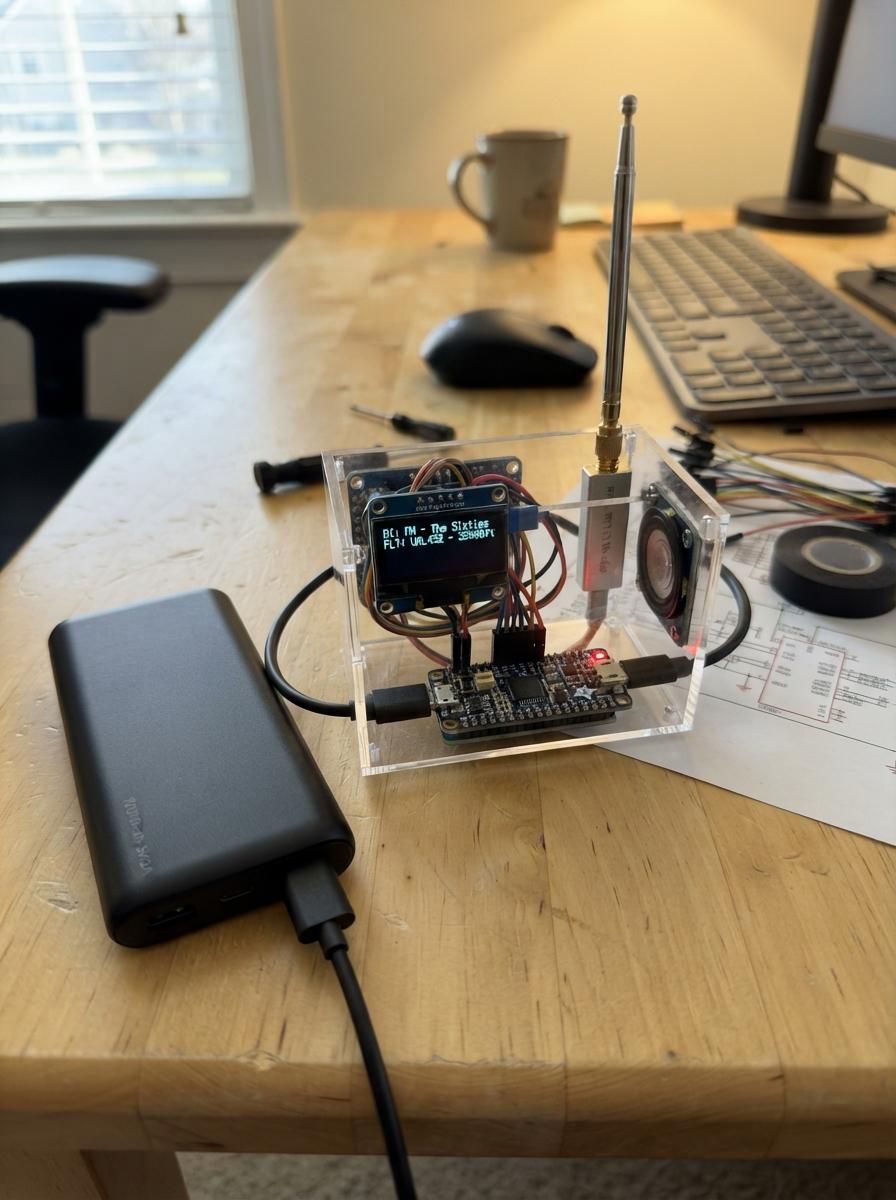
- Internet Radio And Flight Radar by bn sharma: an Elecrow CrowPanel Advanced 10.1-inch ESP32-P4 display that streams MP3 radio stations over Wi-Fi and shows live aircraft tracking, running from a 10,000 mAh USB-C power bank.
- ESP32 Smartphone Schematic by Eyob Abebe: the Waveshare 4.3-inch board in a phone-shaped case with an LVGL app launcher.
There are more boards and builds in the ESP32 project hub and in ESP32 display projects.
Start your own
Open Schematik, name your P4 board and describe what the screen should show. Schematik writes the firmware and you flash it from the browser. Paste this to start:
Build a handheld launcher on the Waveshare ESP32-P4-WIFI6-Touch-LCD-4.3. Use the built-in 4.3-inch touch screen with LVGL, add Weather, Calculator and Clock apps, connect to Wi-Fi through the onboard ESP32-C6, and power it from USB.
Keep building from here
Jump into a step-by-step build, or open Schematik and turn your own idea into code, wiring, and assembly instructions.
Related posts
ESP32-C3 vs S3 vs C6: specs side by side and which to pick
The S3 has two fast cores, a camera port and native USB. The C3 is the tiny low-power one. The C6 speaks Wi-Fi 6, Zigbee and Thread. A side-by-side table from Espressif's datasheets, and which to pick for your build.
ESP32 display projects: touch screens, e-ink and tiny TFTs
A chess game on a Cheap Yellow Display, a camera that sends its photos to e-ink, a hair clip with a screen and a desk buddy with a face. Which ESP32 display board fits which build, and the projects to start from.
ESP32 projects to build in 2027: a plane radar, a desk buddy and 5 more
Seven small ESP32 builds from 2026, from a radar that spots the planes over your roof to a pixel lobster that sulks when you ignore it.
Related builds
DIY ESP Phone
Build an ESP32 touchscreen mini phone with WiFi, app launcher, and interactive apps like weather, clock, and games.
Pixel-Style Mini OS
Build a retro pixel-style OS on ESP32 M5Stack Tab5 with WiFi, touch UI, and custom themes.
Internet Radio And Flight Radar
Build a portable internet radio and flight radar on ESP32 with battery power and a 10.1" touchscreen display.